The Heavy Air of Earth, The Billions of Stars: Day 1 on the Mount Rinjani Trek
We started at the bottom, which is usually the logical place to start a trek, but on Mount Rinjani, the bottom feels less like a starting line and more like a gentle bureaucratic interrogation.
Our stage was Sembalun. Day one lay ahead of us like a six-act play, with each “Pos” (position) serving as a shelter, a milestone, or a place to question your life choices. But before the muscle aches could begin, we had to pass the gatekeepers of health. The morning medical checkup was surprisingly smooth—a brief encounter with a blood pressure cuff and a weighing scale to prove we were legally fit to defy gravity. From there, our guide took over the heavy lifting of paperwork, submitting health forms and park receipts while we waited our turn for the official passport verification.
By 9:30 AM, the bureaucracy was behind us, and the mountain was ahead.
The Cloud Line and the Seven-Dollar Symphony
The initial trail out of Sembalun is a proper, honest hike. Local entrepreneurial spirits zoomed past us on motorbikes, offering a bumpy ride to the higher positions. We politely declined. If you don’t earn the elevation with your own calves, can you really look the mountain in the eye later?
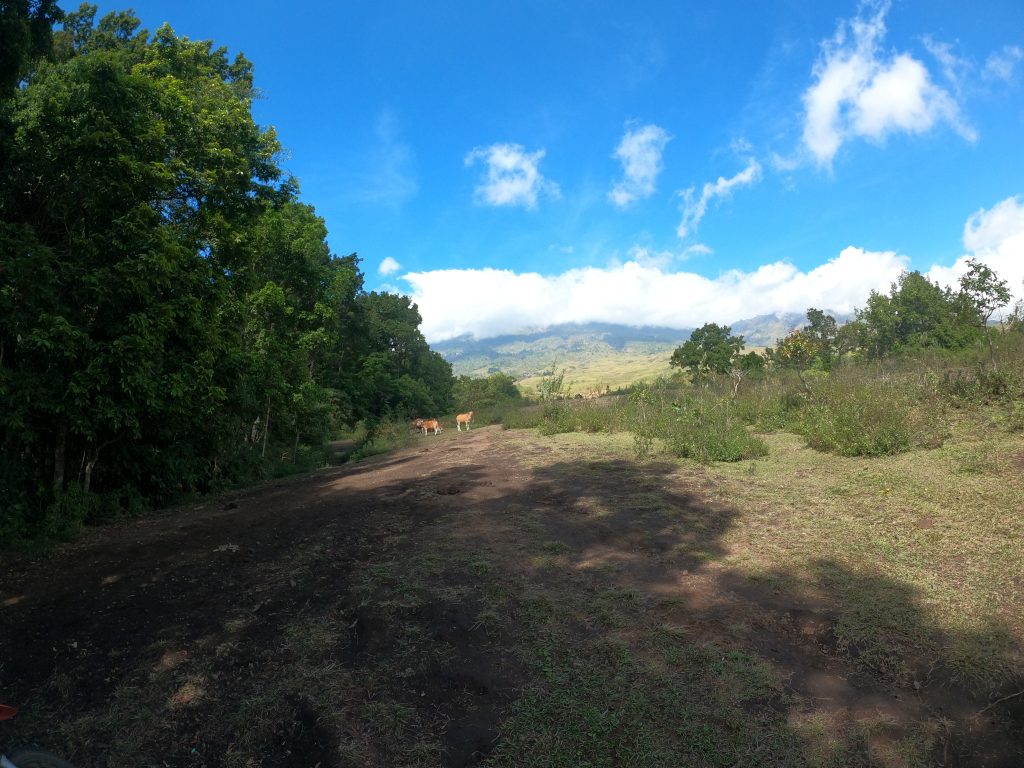
Instead, we walked to the rhythm of the local lawnmowers: cows. Dozens of them lined the paths, their neckbells clinking in a chaotic, pastoral symphony.
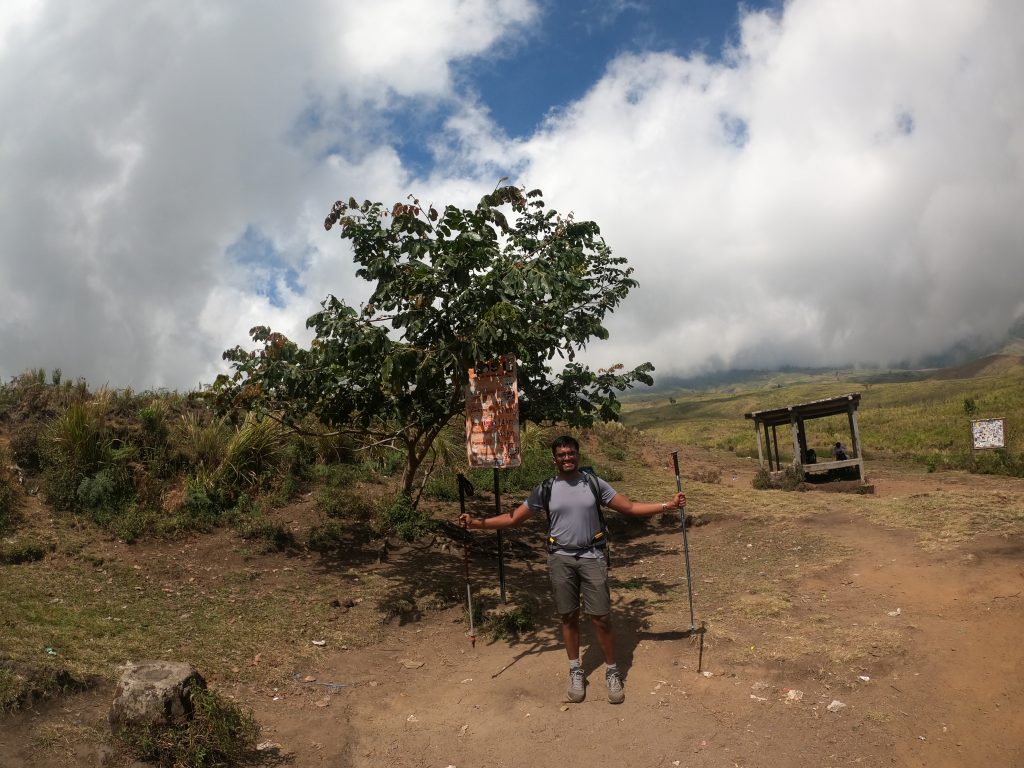
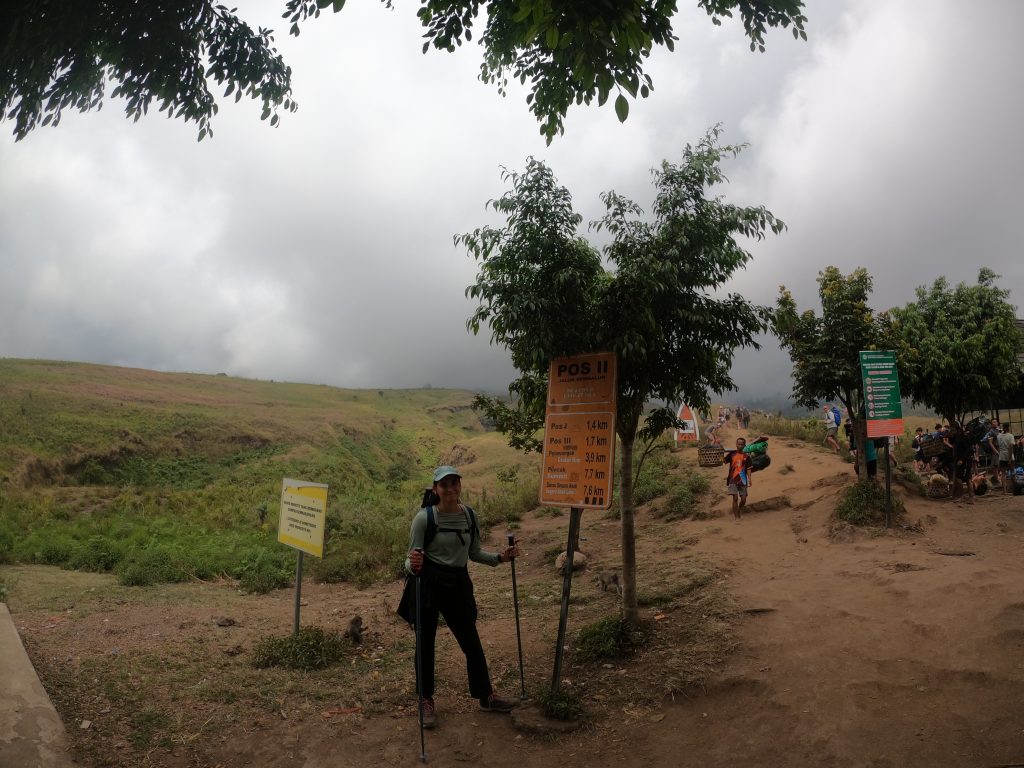
As we trudged onward, the tropical sun decided to take an early retirement. Heavy, white clouds began forming right before our eyes, rolling down the ridges like slow-motion avalanches. By the time we approached Pos 2, the sun was completely gone, swallowed by a thick, damp mist. We were officially walking inside a cloud. It is a profoundly humbling thing to have your horizon reduced to twenty feet of dirt and the faint sound of cowbells. Luckily, our guide materialized with biscuits—a highly effective, sugar-coated antidote to philosophical dread.
Pos 3: The United Nations of Sore Calves
Pos 3 is where the solitary trek transforms into a global convention. It serves as the ultimate national park checkpost. Trekkers from every corner of the earth assemble here under the shelters, looking like a colorful, multi-lingual mosaic of exhaustion. Most groups were already huddled over aluminum plates, crushing their lunch before the big ascent to the base camp at Pos 6.
We pushed past the crowds, eyeing their food like hungry wolves, because our lunch destiny awaited at Pos 4.
We marched into Pos 4 at 1:30 PM. The weather was holding steady—cloudy, cool, and beautifully pleasant. Then came the food. Our crew laid out a spread that could have fueled a small army: mountains of rice, crispy crackers, and a sugary hot drink that hit my system like liquid lightning. It was incredibly fulfilling. It was also deeply exhausting. There is a specific physical state known only to hikers where you are simultaneously full of energy and entirely ready to take a three-hour nap on a wet rock.
The Wall to Pos 6
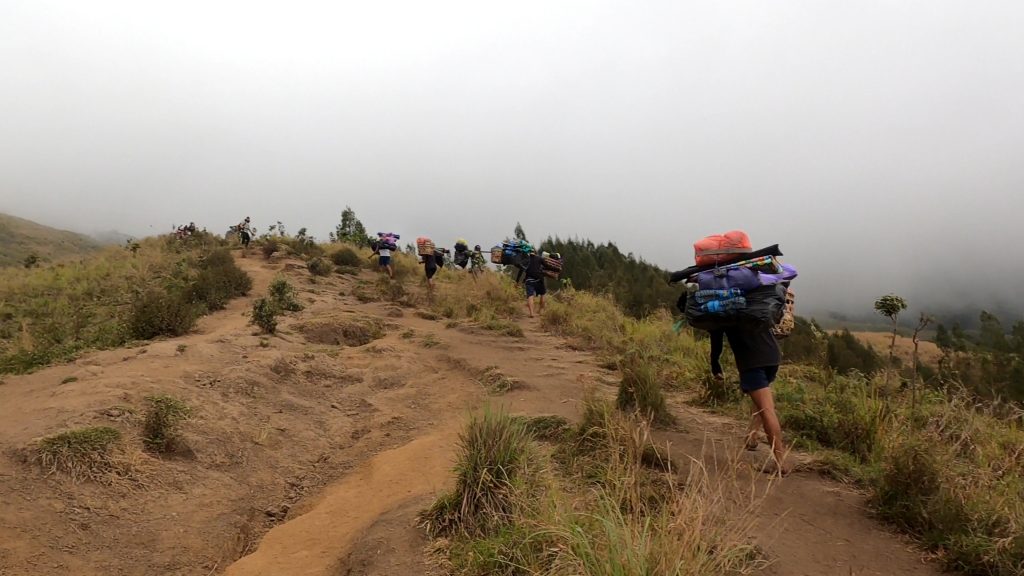
But gravity waits for no one. We shook off the food coma and tackled the stretch to Pos 5 and 6. This is where Rinjani stops playing nice. The incline sharpens dramatically. The solid dirt gives way to loose, shifting volcanic ground where for every two steps forward, your boots slide half a step back.
In Sasak culture, Rinjani isn’t just a geographical feature; it’s a living, breathing spiritual anchor. As the climb grew more strenuous and the ground grew more unstable, you begin to understand why. The mountain demands a tax in sweat. It forces you to look down, watch your footing, and stay completely grounded in the immediate, brutal present.
After about three and a half hours of heavy breathing and silent bargaining with my knees, the mist parted. There, sitting on a ridge like a mirage, was a lone tent. Then another. Then a whole city of brightly colored nylon, complete with a tiny, improbable makeshift shop selling snacks.
We had made it to the Plawangan Sembalun Crater Rim campsite. It was 5:40 PM.
The Lake and the Cosmic Ceiling
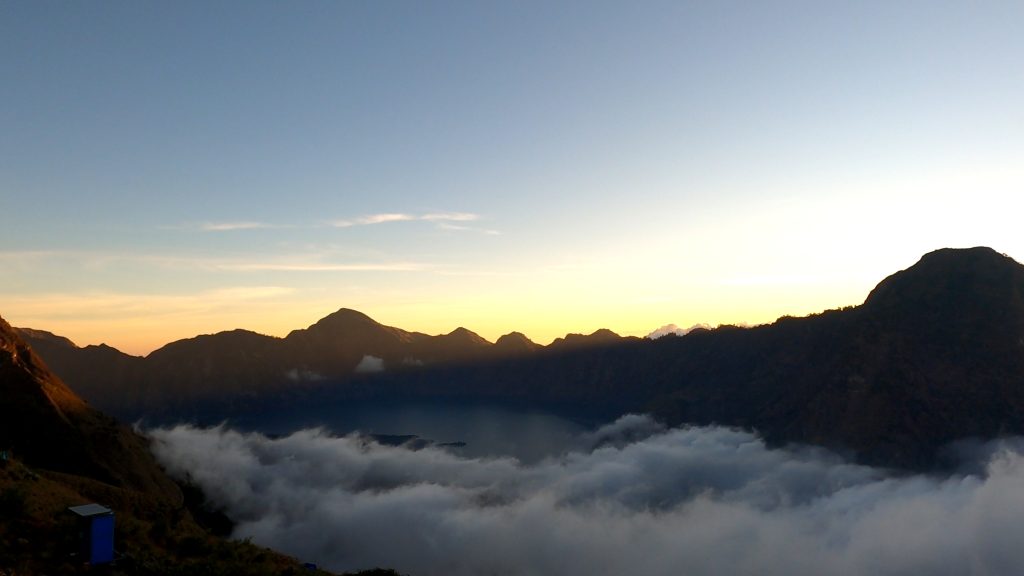
Because the universe appreciates dramatic timing, the clouds that had swallowed us all day finally dropped beneath our feet. We were standing above the weather. The setting sun cast a golden, liquid light over the sea of white mist below us.
Our specific campsite was located another 500 meters down the trail, right on the jagged edge of the rim. We walked past dozens of tents until we reached our spot, and that’s when Rinjani delivered its real reward. The clouds parted to reveal the deep, turquoise expanse of Segara Anak—the sacred crater lake. The wind whipped over the ridge, carrying the mist across the water in frantic sheets. It was an otherworldly, breathtaking sight that made the last six hours of shifting gravel entirely irrelevant.
Our guides gave us the evening brief: dinner at 7:00 PM, wake up at 2:00 AM for breakfast, and a 2:30 AM midnight push to the absolute summit. “Sleep early,” they advised.
That was an excellent theory. The practice was entirely different.
After dinner, adrenaline and the rapidly dropping temperature kept sleep at bay. I crawled out of the tent around 8:00 PM, shivering in multiple layers of clothing, and looked up. The clouds were entirely gone, and the sky had opened up.
Away from the city lights, at nearly 2,600 meters above sea level, the night sky wasn’t dark—it was crowded. The brilliant, smoky river of the Milky Way stretched directly overhead, surrounded by billions of piercing, icy stars. Looking at that cosmic ceiling while sitting on the edge of an active volcano in Lombok, you realize just how small you are. We are just tiny, temporary visitors on a very old, very beautiful rock.
I stared at the stars until the cold forced me back inside my sleeping bag. In six hours, we would be climbing into that sky.
The Midnight Illusion and the “Jurassic Park” Escape: Part 2
They say sleep is a weapon, but at 2:00 AM on the crater rim of Mount Rinjani, my weapon was entirely unloaded. I had managed a grand total of two hours of sleep—a brief, shivering slumber that left me less “rested” and more “existentially confused.”
My fuel for the ultimate summit push? A single pancake and a banana. It felt like trying to power a rocket ship with a AA battery, but as the head torches of early-rising hikers began to snake up the ridge like a glowing mountain-dwelling caterpillar, we stepped into the dark a little later than the rest. Insufficient sleep be damned; the mountain was waiting.
The Sifting of the Crowd: Three Stages of Suffering
The route quickly turned into a masterclass in gravity. As the trail grew steeper and windier, the dust kicked up by dozens of boots hung thick in the cold air. Unstable ground shifted beneath us. Yet, moving with the slow, steady rhythm of survival, we found ourselves passing hikers who had stopped to nurse their burning calves.
The climb up Rinjani is cruel because it plays psychological games with you. It breaks down into three distinct acts:
- The Steep Dirt Climb: A brutal introduction to warm up your knees.
- The Flat Surface: A brief, beautiful lie that makes you think the worst is over.
- The Medium-Hard Rocky Stretch: A steeper, more stable rocky ground where the elements truly turn hostile.
It was on this third stretch where the mountain started cracking people’s resolve. The gusts of wind became terrifyingly violent, carrying a freezing breeze that cut through layers of clothing. Hikers were laying down right on the rocks, huddled under shiny silver aluminum emergency blankets. It looked like a sci-fi movie scene about a failed space colony.
Self-doubt is a contagious thing. Looking at people wrapped in foil makes you question your own sanity. It was right here that the mountain claimed its first tax on our team. My wife turned to me, completely spent, and said she couldn’t continue without taking constant breaks. We made the tough but necessary executive decision: she would stay back with the main guide, and I would push on alone toward the final ridge.
Nature’s Finest Hour
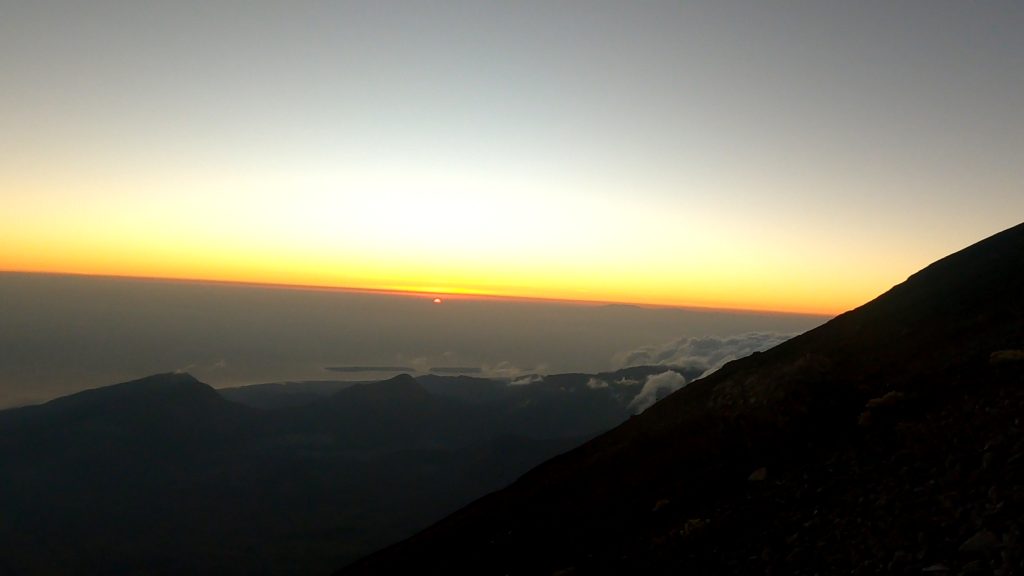
Twenty minutes of solitary climbing brought me to the base of the true monster: the final summit ridge. It was almost dawn.
And then, the universe decided to apologize for the wind.
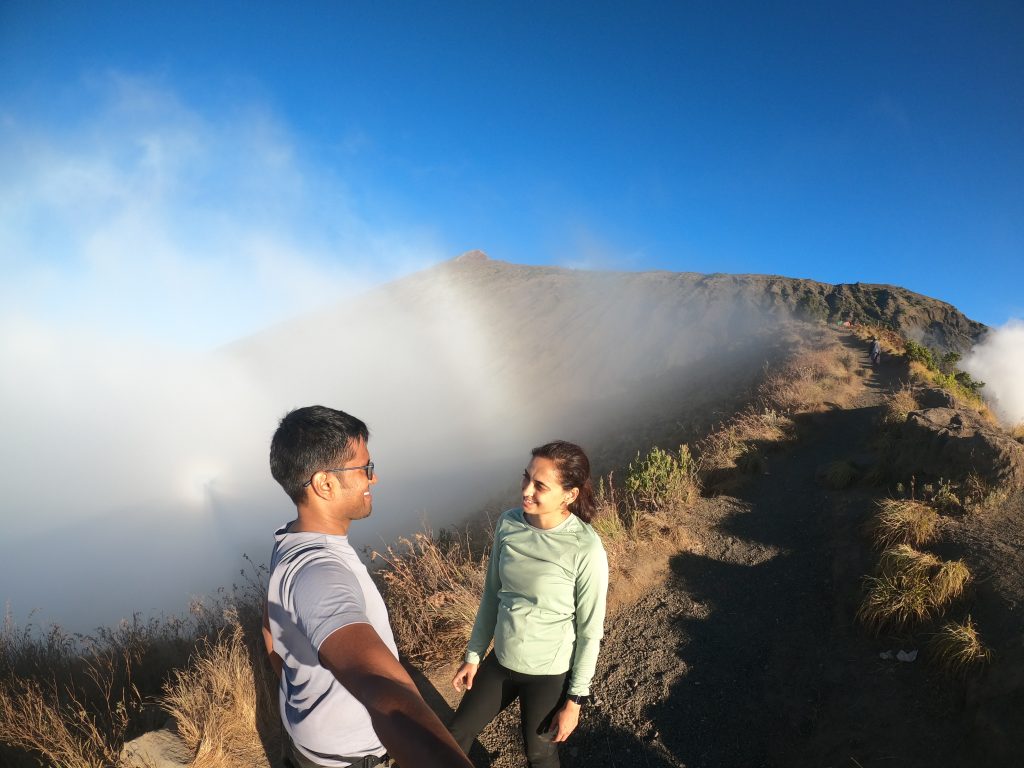
To my left, a soft, pinkish sun began to peek over the horizon, painting the sky in pastel hues. Behind me, the massive bowl of the crater held the dark, sleeping waters of Segara Anak lake. For a moment, the biting cold and the exhaustion evaporated. I stood frozen—not from the temperature, but from sheer awe. It was nature’s finest hour, an overwhelming, cinematic display of beauty that reminded me why humans do stupid things like climbing active volcanoes at 3:00 AM.
But looking up, the illusion shattered. I could see the final, steepest stretch ahead, punctuated by distant, flickering head torches being whipped by the gale.
The Ultimate Treadmill: Three Steps Forward, One Step Back
If the medium-hard part was an audition, the final hour to the summit was the main event. It was a hellscape of loose, rolling volcanic gravel. Every step was a negotiation with the terrain: take three steps forward, slide one step back. The wind howled so loudly it sounded like the rocks themselves were groaning.
Halfway up this gravel wall, I watched a few early-summiters descending. They weren’t walking; they were literally gliding down the loose gravel like alpine skiers on ash. It looked incredibly fast and enviable, a stark contrast to my agonizingly slow upward march.
Many people turned back at this halfway mark. There is no shelter on that ridge, no refuge from the wind, just you and a giant pile of kitty litter on a 45-degree angle. I kept my head down and marched. Thirty minutes later, the gravel miraculously gave way to a stable rock cutout. The wind suddenly died down, shielded by the mountain’s peak. One last push, and the ground leveled out.
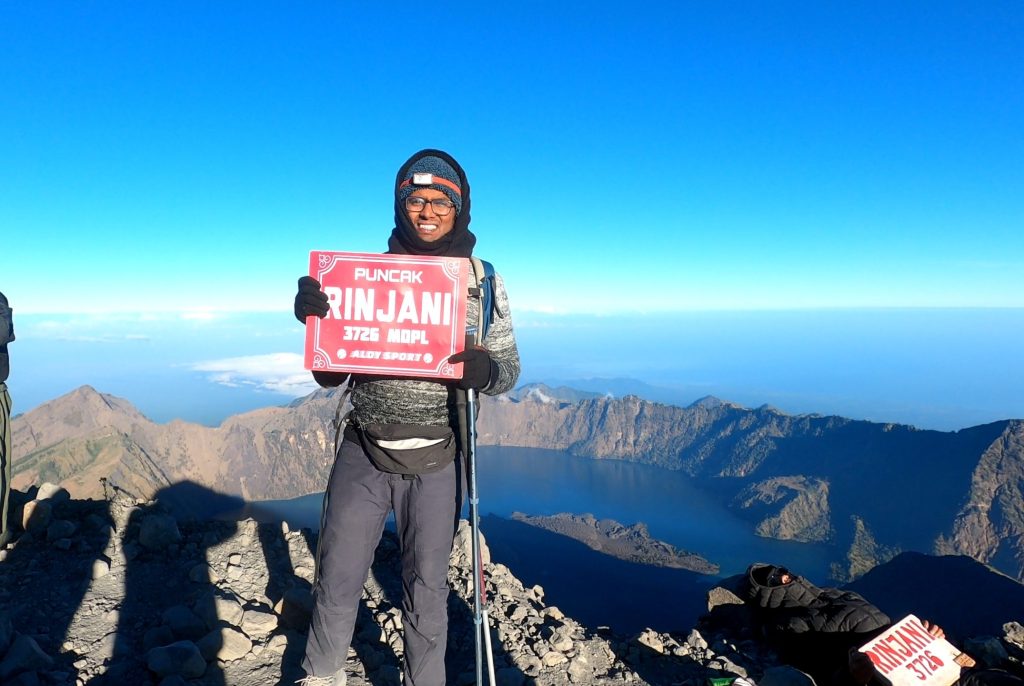
I reached the summit at 7:20 AM.
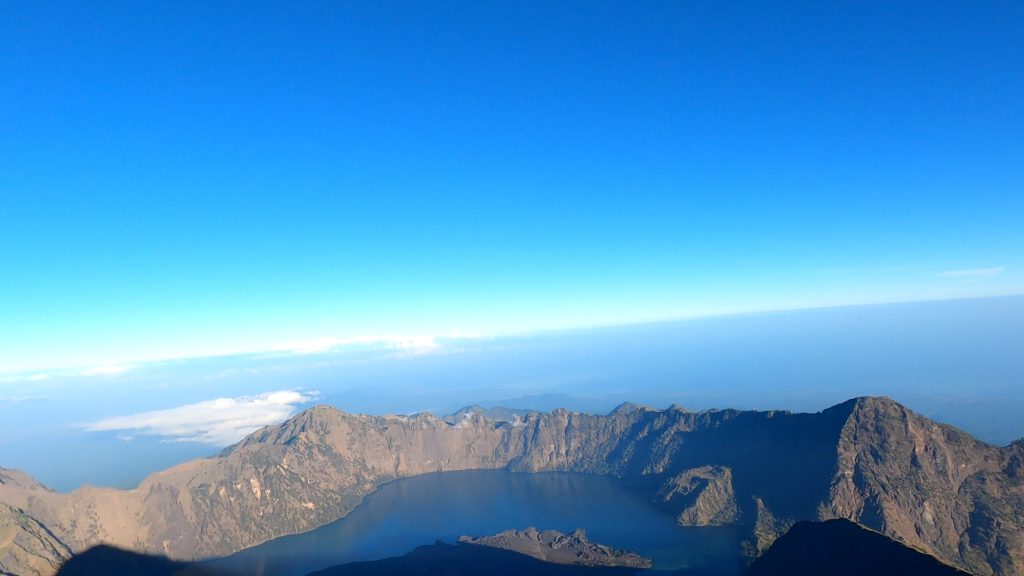
My hands were completely frozen from the final ascent, and the bright morning sun did little to thaw them, but the view was an absolute spiritual reward. At 3,726 meters, the wind was strangely calm. I sat down, unwrapped a protein bar with stiff fingers, and took it in. You could see the Gili Islands dotting the coastline, the majestic silhouette of Bali’s Mount Agung piercing the distant clouds, the entirety of Segara Anak lake below, and even the faint grid of Mataram city far away. You feel incredibly small, yet profoundly blessed to be standing on the roof of Lombok.
What Goes Up Must Glide Down
At 7:45 AM, it was time to leave the heavens. Remember that gravel treadmill that took an hour to climb? Descending it was a comedic masterpiece. I leaned back and literally glided through the loose scree. I lost my balance and wiped out a few times, picking myself up covered in grey dust while the extreme wind tried its best to knock me over again.
It took me exactly 25 minutes to descend what had taken hours to climb.
At the base of the hard stretch, I was reunited with my wife and guide. She had bravely managed another 20 minutes of climbing after we parted before finding her own limit, and they had been waiting for me for nearly an hour and a half in the freezing wind.
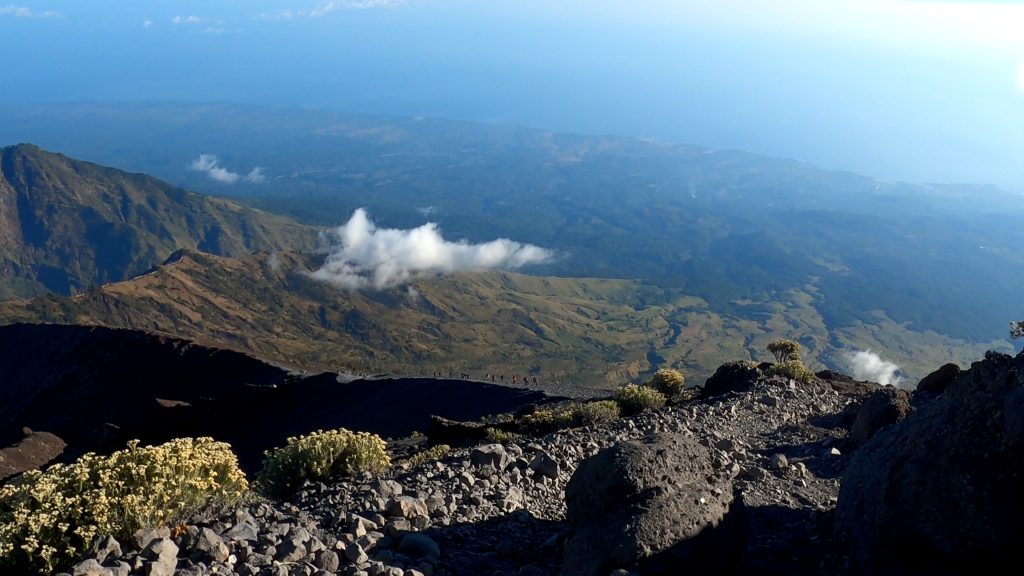
We still had ten massive hours of hiking ahead of us for Day 2. We took a brief 30-minute break back at our main campsite to inhale some refreshments, pack our lives away, and at 11:45 AM, we began the steep descent into the crater bowl toward Segara Anak Lake.
The Missing Lake and the Jurassic Park Sanctuary
The path down to the lake is a vertical labyrinth of steep drops, iron railings, and metal ladders clamped onto the cliffside. Interestingly, the heavy crowds from the morning summit completely vanished here; the trail was quiet, deeply pleasant, and rapidly filling with thick mountain clouds.
By the time we reached the shores of Segara Anak after 4.5 hours of jarring downhill steps, the fog was so dense that the famous turquoise lake was completely invisible. It had vanished into a wall of white.
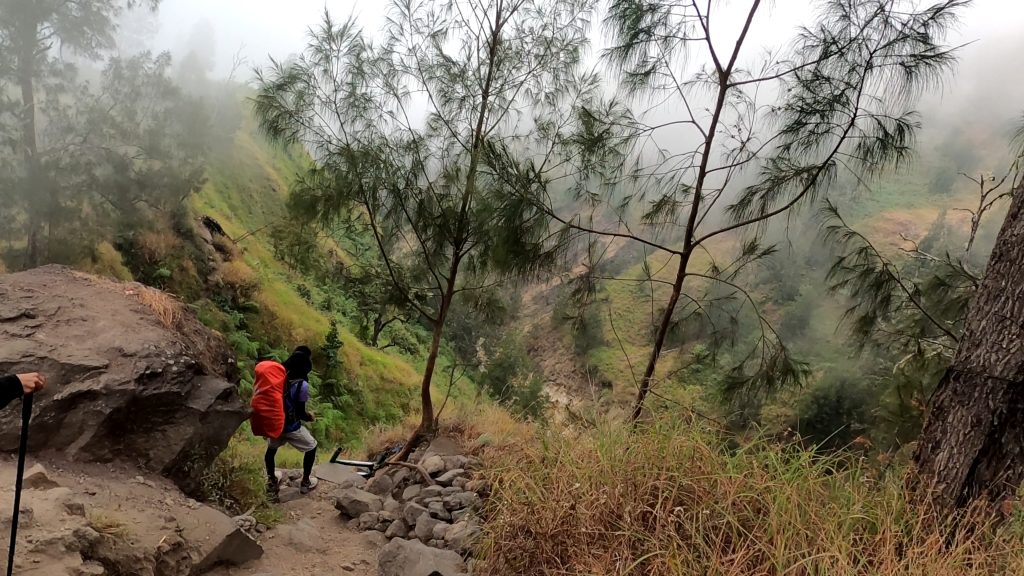
Since we couldn’t see the water, we went into it. Our guide led us to the natural hot springs near the Susu Cave. Slipping into that hot, mineral-rich water bubbling directly out of the volcanic earth was nothing short of a religious experience for my shattered muscles. It washed away the grit of the summit and the exhaustion of the road.
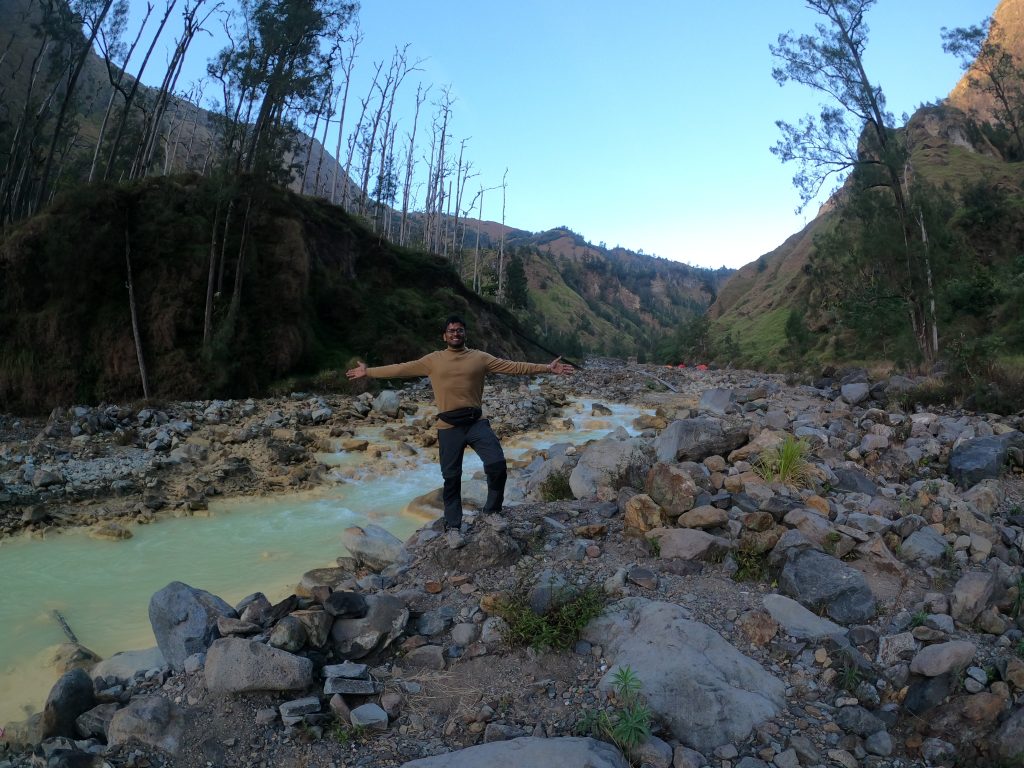
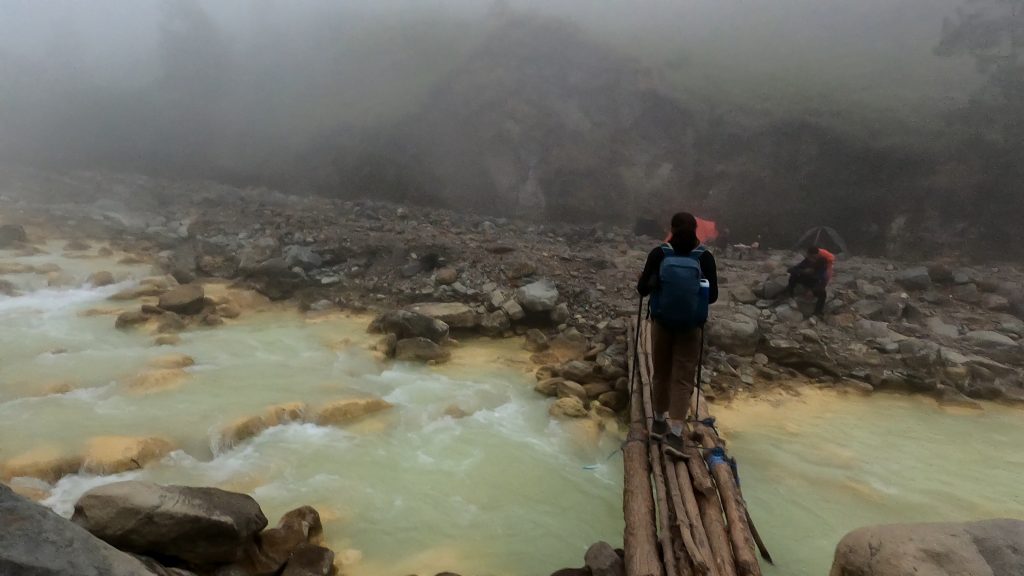
Fully relaxed and thoroughly tenderized, we walked another hour and a half past a roaring, massive waterfall and along a rushing river. The sun was dipping, and our guide had to go on a scouting mission downstream to find where our incredible porters had set up camp. They had found an absolute paradise: a secluded, quiet spot right next to the river, far away from the main trekking crowds. We rolled into camp at 5:30 PM, ate a massive dinner at 6:30 PM, and promptly fell into an 11-hour sleep that could have rivaled a coma. Waking up to the sound of gushing water and the towering green walls of the Torean valley was pure magic
Day 3: The Lost World of Torean
If the Sembalun side of Rinjani is a harsh, volcanic desert, the Torean side is an emerald kingdom. It is universally nicknamed Indonesia’s “Jurassic Park,” and within an hour of hiking on Day 3, you understand why.
Our final day was a 10-hour trek through deep, dramatic jungles and sprawling grasslands. Every single twist in the trail revealed lush green canyon walls, the constant, comforting roar of the river, and massive waterfalls plunging into the abyss. We stopped at a spectacular waterfall four hours into the day to take photos, realizing we were almost entirely alone. Unlike the highway of hikers on the summit route, the Torean trail was beautifully empty, populated mostly by local farmers and porters.
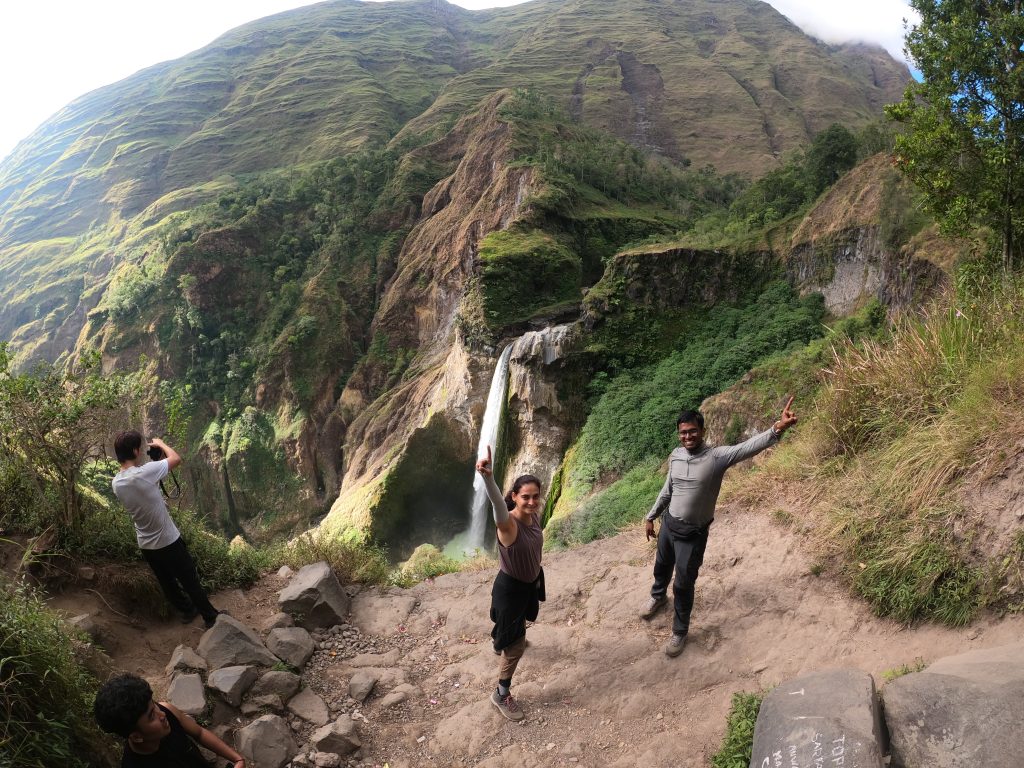
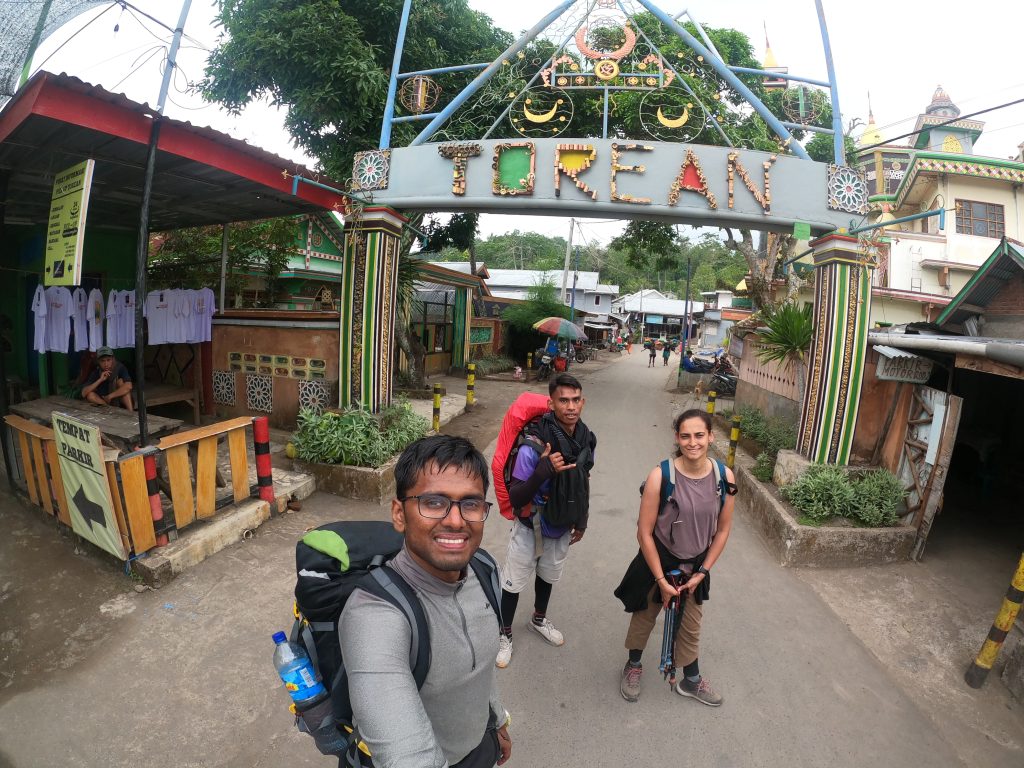
We finally reached the Torean checkpost around 1:00 PM for a celebratory lunch, and by 2:00 PM, our boots hit flat asphalt at Torean village. A pickup van was waiting to carry our dusty, broken, yet thoroughly fulfilled bodies back to civilization.
Before this trip, I had foolishly thought of Rinjani as just an “easy hike with a nice lake view.” The summit ridge thoroughly corrected my arrogance. It was the most adventurous, grueling, and visually stunning psychological battle I’ve ever put my body through—a reminder that the hardest paths often lead to the most unforgettable horizons.